Why Busy Indian Kitchens Are Retiring Paper KOTs: The Kitchen Display System (KDS) Shift
The 8:30 PM Kitchen Nightmare It is 8:30 PM on a Saturday evening in a packed 30-table casual dining restaurant in Bengaluru, Mumbai, or Delhi. Thermal…
Dineezy Team
3 Oct 2026 · 6 min read
On this page17 sections
- The 8:30 PM Kitchen Nightmare
- The Hidden Vulnerabilities of Paper Kitchen Tickets
- 1. The Single-Ticket Bottleneck
- 2. The Cost of Consumables
- 3. Zero Order Latency Telemetry
- 4. Missed Dietary and Spice Modifiers
- Thermal Paper Printers vs. Dineezy Kitchen Display Systems
- How Station-Split KDS Coordinates Peak Rush Hours
- 1. Station-Level Splitting
- 2. Color-Coded Time Aging
- 3. The Expediter Consolidation Screen
- The 4-Step Transition from Paper to Digital KDS
- Frequently Asked Questions
- Can a kitchen screen survive high heat and kitchen grease?
- What happens if a tablet gets disconnected from Wi-Fi?
- How much faster does food reach tables with a KDS?
- The Operational Bottom Line
The 8:30 PM Kitchen Nightmare
It is 8:30 PM on a Saturday evening in a packed 30-table casual dining restaurant in Bengaluru, Mumbai, or Delhi.
Thermal printers are spewing paper Kitchen Order Tickets (KOTs) at the rate of three per minute. The tickets drop onto a stainless-steel counter soaked in curry splashes and cooking oil.
The tandoor cook skewers ten orders of chicken tikka. The curry chef yells at the Chinese wok station to check if their noodles are ready. A floor runner grabs a ticket to find an order for Table 14, but the paper slips between the prep fridge and the counter.
Thirty-five minutes pass. Table 14 flags the manager, furious that their appetizer has not arrived while neighboring tables who sat twenty minutes later are already eating desserts. The guest cancels their entire dinner bill and posts a 1-star Google review before leaving the dining room.
This scene plays out in thousands of busy Indian restaurant kitchens every weekend. The bottleneck is not culinary talent or staff work ethic. The bottleneck is relying on 1980s paper thermal roll printers to coordinate modern multi-station kitchen workflows.
In 2026, progressive restaurants are replacing paper ticket printers with station-split Kitchen Display Systems (KDS) that slash order turnaround times and eliminate order errors.
---The Hidden Vulnerabilities of Paper Kitchen Tickets
Thermal paper rolls create four recurring operational problems during peak dining rush hours:
1. The Single-Ticket Bottleneck
When a party of six orders two mocktails, four tandoor appetizers, three main curries, and six naans, a traditional thermal printer spits out a single monolithic paper ticket. Who holds the ticket? The tandoor chef? The curry line? The beverage bar?
Kitchen staff either pass the greasy slip back and forth or rely on memory. Station coordination breaks down, resulting in food cooling under heat lamps while waiting for side breads.
2. The Cost of Consumables
A busy restaurant running dine-in, takeaway, and delivery orders prints between 400 and 700 paper tickets daily. Thermal paper rolls, printer replacement parts, and maintenance cost between ₹3,500 and ₹6,000 every single month in wasted consumables that end up in the trash bin after twenty minutes.
3. Zero Order Latency Telemetry
With paper slips, restaurant owners have zero visibility into cook times. Did Table 6 wait 12 minutes or 42 minutes for their butter naan? Did the kitchen prepare the food quickly while floor waiters delayed delivery? Paper provides no audit trail.
4. Missed Dietary and Spice Modifiers
Special customer requests—"No onion, no garlic", "Extra spicy for Table 8", "Peanut allergy"—appear in tiny 9-point thermal print that line cooks miss during rush periods. Cooking the wrong dish requires remaking the plate, bleeding raw inventory and delaying table turnover.
---Thermal Paper Printers vs. Dineezy Kitchen Display Systems
| Operational Feature | Thermal Paper KOT Printers | Dineezy Digital Kitchen Display System (KDS) |
|---|---|---|
| Station Routing | Single ticket shared or requires multiple noisy printers | Orders split instantly to Tandoor, Curry, and Bar screens |
| Ticket Tracking | Tickets get lost, grease-stained, or blown away | Permanent digital queues with color-coded countdown timers |
| Customization Visibility | Small faint print; easily overlooked by line cooks | Prominent visual badges for spice levels and allergies |
| Runner Notification | Cooks shout table numbers across noisy kitchens | 1-tap "Bump" notifies floor runner phones instantly |
| Monthly Consumables Cost | ₹3,500 to ₹6,000 in paper rolls and ribbons | ₹0 paper waste; runs on commercial Android tablets |
| Prep Time Telemetry | Zero data on station cooking speed | Real-time reports on average prep time per station and dish |
How Station-Split KDS Coordinates Peak Rush Hours
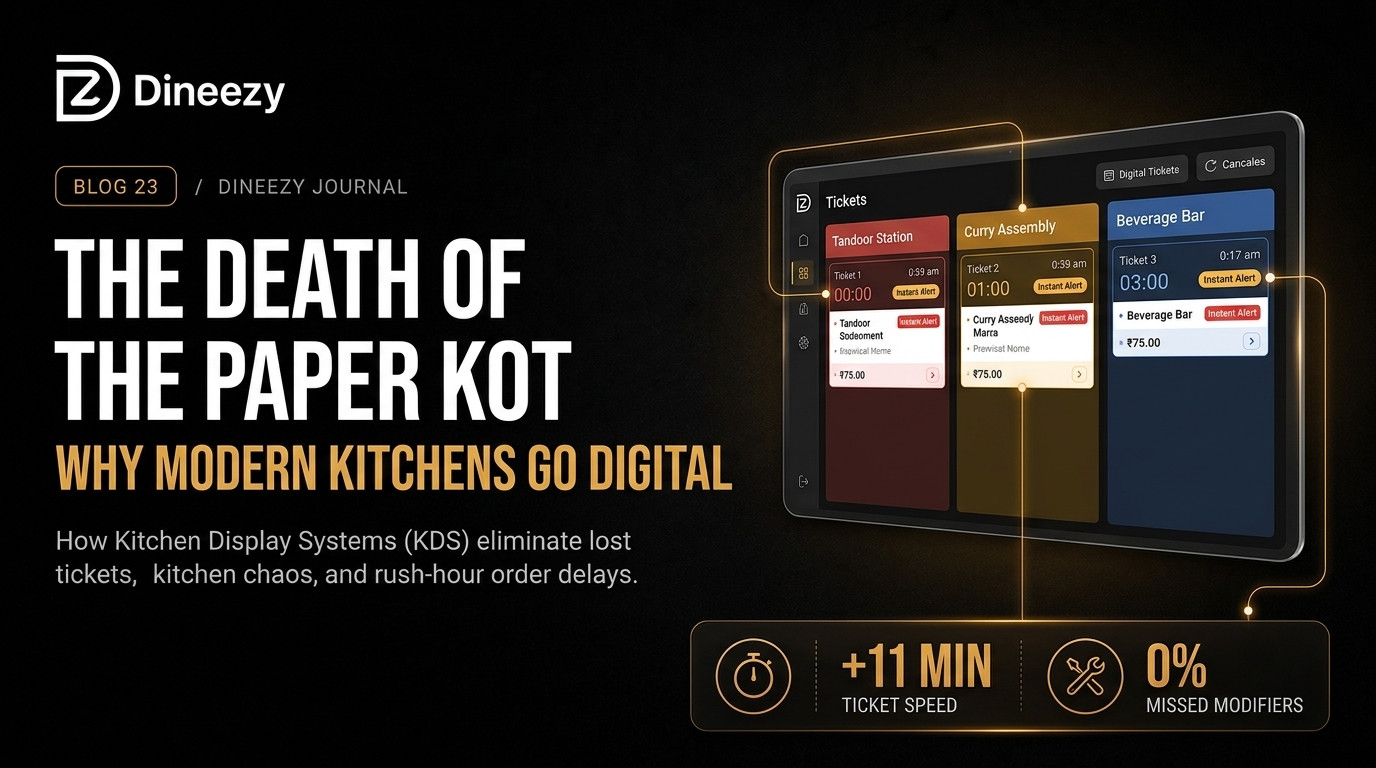
In Dineezy, Kitchen Display Systems operate on affordable commercial touchscreens mounted above cooking lines. The routing functions automatically the instant an order is punched by a waiter or submitted via customer QR ordering:
1. Station-Level Splitting
The system dispatches item components only to the relevant station:
- Tandoor Display: Shows Paneer Tikka and Garlic Naan with a countdown timer.
- Curry Line Display: Shows Dal Makhani and Kadhai Paneer.
- Beverage Bar Display: Shows Masala Chai and Mango Shakes.
Each station focuses exclusively on their active prep line without sorting through unrelated dishes.
2. Color-Coded Time Aging
Tickets display dynamic color indicators based on elapsed time:
- Green (0 – 10 minutes): Normal prep schedule
- Amber (11 – 18 minutes): Priority warning threshold
- Flashing Red (19+ minutes): Overdue alert prompting kitchen supervisor intervention
Executive chefs identify delayed tables at a glance before guests become impatient.
3. The Expediter Consolidation Screen
At the pass counter, the head chef or expediter views a master screen. When all individual stations complete their items and tap their screens, the master pass alerts the runner that the entire table order is ready for coordinated service.
---The 4-Step Transition from Paper to Digital KDS
- [ ] Step 1 — Map Kitchen Stations: Group your menu into functional cook zones (Appetizers/Tandoor, Main Curries, Wok/Fryer, Bar/Beverages).
- [ ] Step 2 — Mount Durable Hardware: Install commercial 10-inch or 14-inch Android touchscreens in moisture-resistant protective cases near cook lines.
- [ ] Step 3 — Configure Station Routing in Dineezy: Assign menu categories to their respective display screens in your POS settings.
- [ ] Step 4 — Retire the Primary KOT Printer: Train cooks to tap tickets to clear finished orders. Keep a single backup printer for accounting receipts while running kitchen lines 100% digital.
Frequently Asked Questions
Can a kitchen screen survive high heat and kitchen grease?
Yes. Modern restaurants use standard commercial Android tablets fitted with sealed silicone or tempered glass enclosures. Tablets are mounted away from direct flame zones using adjustable articulated wall brackets.
What happens if a tablet gets disconnected from Wi-Fi?
Dineezy KDS communicates across the local area network (LAN). Even if external internet connectivity drops, local table punches and station routing continue without disruption.
How much faster does food reach tables with a KDS?
Restaurants transitioning from paper tickets to Dineezy Kitchen Display Systems record an average 8 to 13 minute reduction in total ticket turnaround time during peak weekend shifts, enabling faster table turns and higher guest satisfaction.
---The Operational Bottom Line
A restaurant running a modern digital menu and high-speed UPI billing that still prints paper slips to shout orders across a hot kitchen is operating with an unnecessary bottleneck.
Retire paper roll printers, install digital Kitchen Display Systems, and give your culinary team the speed, clarity, and precision they need to excel during peak rush hours.
---Ready to eliminate lost kitchen tickets and speed up prep times with digital KDS?
Discover Dineezy Kitchen Display Systems, Station Routing & Restaurant POS Intelligence
Published by Atharv K. | F&B Systems Explorer | Dineezy F&B Intelligence
Dineezy Team
Author at Dineezy