The Inflation-Proof Menu: How Indian Cafes Use Dynamic Pricing and Digital Menu Engineering to Protect Margins
The ₹15,000 Menu Reprint Trap Between January and September 2026, wholesale commercial dairy in Tier 1 metros rose 14%. Commercial cooking oil climbed 18%, and…
Dineezy Team
3 Oct 2026 · 6 min read
On this page13 sections
- The ₹15,000 Menu Reprint Trap
- The Four Menu Engineering Quadrants: Stars, Puzzles, Plowhorses, and Dogs
- Three Dynamic Menu Strategies That Protect Margins
- 1. Decoy Pricing and Visual Anchor Placement
- 2. Time-Based Daypart Promotions
- 3. Dynamic Item Badging and Scarcity Triggers
- Paper Menus vs. Dineezy Dynamic QR Menus
- The 5-Step Margin Protection Action Plan
- Frequently Asked Questions
- Do customers dislike QR code menus?
- How often should a restaurant review recipe margins?
- Can dynamic digital menus increase beverage sales?
- The Operational Bottom Line
The ₹15,000 Menu Reprint Trap
Between January and September 2026, wholesale commercial dairy in Tier 1 metros rose 14%. Commercial cooking oil climbed 18%, and boneless poultry fluctuated by ₹40 per kilogram across weekly market cycles.
For a high-traffic cafe or casual dining restaurant with laminated physical menus, adjusting prices to reflect wholesale inflation is a logistical bottleneck. Designing, proofing, and printing three hundred physical menu copies costs ₹15,000 and takes two weeks.
Because reprinting is expensive, restaurant operators delay necessary price adjustments. A cafe owner absorbs ingredient increases for four months, watching gross margins compress from 68% down to 54%. When they finally reprint, they apply an across-the-board 15% price increase, triggering immediate customer backlash and negative Google reviews.
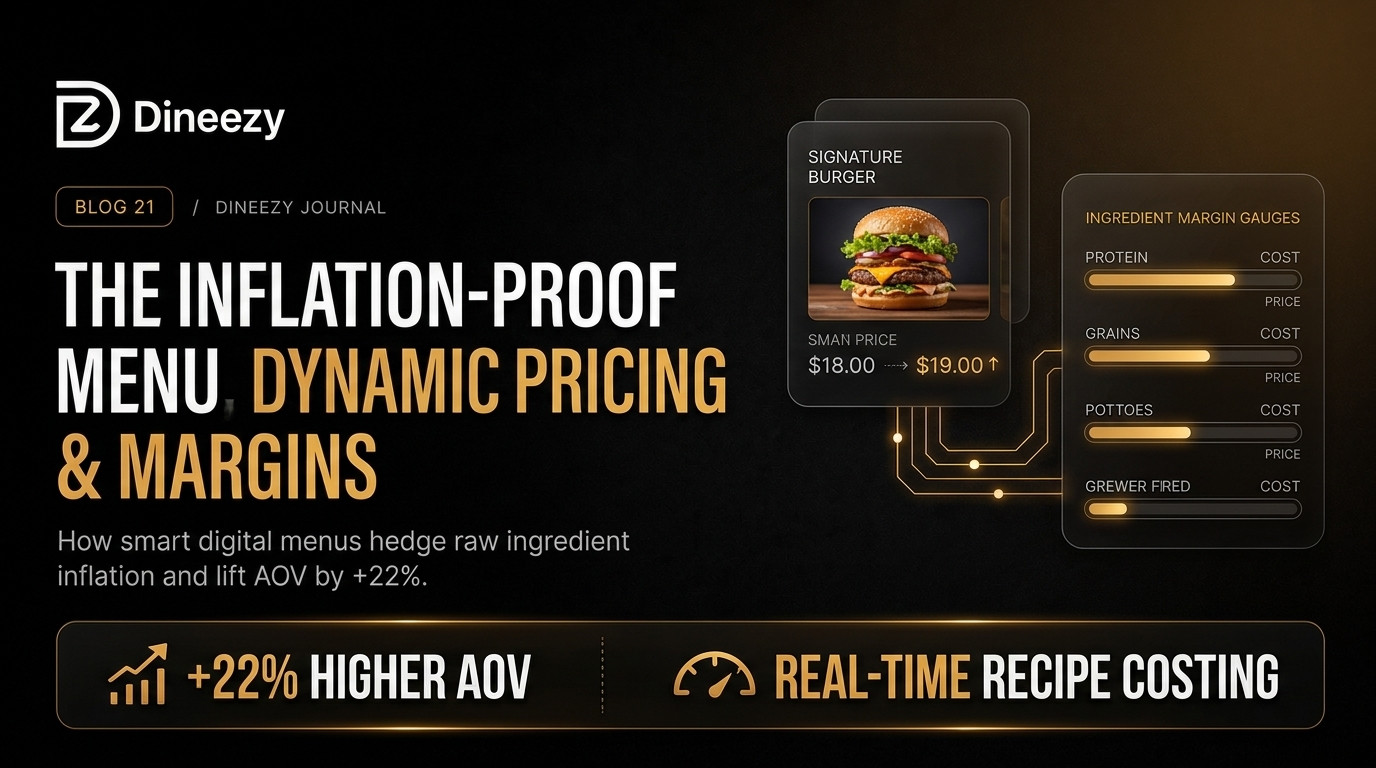
High-performing food and beverage operators in 2026 do not manage costs through annual menu reprints. They run dynamic digital menus that hedge raw ingredient costs weekly, test price elasticity in real time, and deploy menu engineering principles that lift Average Order Value (AOV) by over 20%.
---The Four Menu Engineering Quadrants: Stars, Puzzles, Plowhorses, and Dogs
Before changing a single price on your menu, you must categorize every dish using the Boston Consulting Group menu matrix adapted for commercial kitchens:
| Menu Matrix Category | Popularity (Sales Volume) | Profitability (Contribution Margin) | Operational Action Required |
|---|---|---|---|
| Stars (e.g., Truffle Fries, Cold Brew) | High | High | Promote prominently at the top of digital categories; keep recipes strictly consistent. |
| Plowhorses (e.g., Butter Chicken, Margherita Pizza) | High | Low | Re-engineer recipes to trim portion cost; test gradual ₹15 to ₹25 price increases. |
| Puzzles (e.g., Artisanal Lamb Tacos, Saffron Risotto) | Low | High | Reposition with mouthwatering photo assets; bundle with bestselling beverages. |
| Dogs (e.g., Unordered Specialty Soups, Niche Mocktails) | Low | Low | Remove from the digital menu entirely; eliminate dead ingredient prep waste. |
Three Dynamic Menu Strategies That Protect Margins
1. Decoy Pricing and Visual Anchor Placement
When diners view a list of menu items, their eyes scan in an F-pattern. Eye-tracking data demonstrates that placing a premium anchor item at the top right of a digital section alters price perception.
If a cafe offers three artisanal burgers:
- Truffle Double Smash Burger: ₹590 (Anchor Decoy)
- Classic Smoked Cheddar Burger: ₹380 (Target High-Margin Star)
- Standard Crispy Veg Burger: ₹280
The ₹590 burger establishes a high reference price. The ₹380 burger now feels like sensible, moderate value to the guest. The kitchen makes a 71% gross margin on the ₹380 burger, which sells at three times the volume of the anchor.
2. Time-Based Daypart Promotions
Fixed paper menus display the exact same prices and combos on a rainy Tuesday at 3:30 PM as they do during a packed Saturday 9:00 PM rush.
With Dineezy's digital menu engine, the menu adapts to dayparts automatically:
- Afternoon Lull (2:30 PM – 5:30 PM): The menu prioritizes high-margin coffee and pastry pairing combos, converting idle floor tables into productive revenue.
- Evening Rush (7:30 PM – 11:00 PM): The menu highlights high-speed kitchen items and signature platters, reducing ticket prep times and lifting the average bill.
3. Dynamic Item Badging and Scarcity Triggers
Tagging items with clean visual badges like "Chef's Pick", "Only 8 Portions Left Today", or "Top Rated in Indiranagar" increases selection velocity by 24%. Diners who feel decision fatigue default to recommended items, steering orders toward dishes where the kitchen has prepped fresh batch stock.
---Paper Menus vs. Dineezy Dynamic QR Menus
| Feature | Laminated Paper Menus | Dineezy Dynamic QR Menus |
|---|---|---|
| Update Latency | 10 to 14 days (design, proofing, print run) | Instant (updates in 5 seconds via POS) |
| Cost per Price Change | ₹8,000 to ₹18,000 per print cycle | ₹0 |
| Out-of-Stock Handling | Waiters verbally apologize after guests order | 1-tap 86 toggle grays out unavailable items |
| Upsell Add-On Velocity | Depends entirely on waiter memory and mood | Automated visual add-ons on every item click |
| Average Order Value (AOV) | Baseline bill value | +18% to +24% higher through automated upsells |
The 5-Step Margin Protection Action Plan
- [ ] Step 1 — Calculate Recipe Plate Costs: Weigh raw ingredients for your top 10 bestselling dishes and calculate actual plate cost against wholesale purchase receipts.
- [ ] Step 2 — Identify Your Plowhorses: Isolate dishes with high volume but margins under 60%. Test a ₹20 price increase on your digital menu this Friday.
- [ ] Step 3 — Configure 1-Tap Upsell Modifiers: Add automated prompts on burgers and pizzas: "Add Double Cheese (+₹45)", "Pair with Iced Hibiscus Tea (+₹110)".
- [ ] Step 4 — Retire Dead Inventory Dogs: Remove the bottom five items that generate less than 2% of monthly revenue and consume prep storage.
- [ ] Step 5 — Enable Instant Out-of-Stock Toggles: Train floor managers to toggle items off immediately when ingredients run out, avoiding awkward guest cancellations.
Frequently Asked Questions
Do customers dislike QR code menus?
Customers dislike clunky PDF menus that require pinching and zooming on 40MB image files. When a digital menu loads in under one second with high-resolution food photography, clear dietary filters, and instant reordering, customer satisfaction ratings exceed 90%.
How often should a restaurant review recipe margins?
In periods of food price volatility, restaurants should audit high-value ingredient costs every two weeks. Dynamic digital menus allow operators to adjust prices by ₹10 or ₹15 incrementally without drawing negative attention.
Can dynamic digital menus increase beverage sales?
Yes. Pairing suggestions triggered during dessert or main course selection routinely lift non-alcoholic beverage and craft coffee sales by 28% compared to paper menus where guests rarely flip back to the drink page.
---The Operational Bottom Line
Surrendering your restaurant's net profit margin to raw food inflation because reprinting paper menus is inconvenient is an expensive operational mistake.
Deploy digital menu engineering, protect your contribution margins in real time, and give your guests a responsive, beautiful dining experience that increases revenue on every table.
---Ready to optimize your menu margins and increase table spend with zero-code QR ordering?
Explore Dineezy Dynamic QR Menus, Table Ordering & High-Speed POS Intelligence
Published by Atharv K. | F&B Systems Explorer | Dineezy F&B Intelligence
Dineezy Team
Author at Dineezy