Restaurant Table Reservation Systems: Features, Benefits and How to Reduce No-Shows
Discover how modern table reservation systems eliminate costly no-shows, optimize peak weekend seating, and streamline guest arrivals using automated WhatsApp confirmations.
Dineezy Team
13 Oct 2026 · 6 min read
On this page16 sections
- The Hidden Cost of the Empty Reserved Table
- The Problem with Manual Phone and Diary Bookings
- What Modern Table Reservation Systems Do
- 5 Practical Strategies to Eliminate Restaurant No-Shows
- 1. Implement Automated WhatsApp Confirmations
- 2. Enforce a Strict 15-Minute Holding Policy
- 3. Require Nominal Token Deposits for Large Parties (6+ Guests)
- 4. Maintain a Managed Digital Waitlist for Walk-Ins
- 5. Track Guest Reliability Scoring
- Comparing Booking Approaches
- Important Guest-Experience and Customer-Data Considerations
- Frequently Asked Questions
- Should a small cafe or casual restaurant accept reservations?
- How do token deposits affect guest booking conversion?
- How does Dineezy help restaurants manage floor operations?
- Maximize Every Peak Dining Hour
The Hidden Cost of the Empty Reserved Table
It is 8:15 PM on a Saturday night. Your restaurant's waiting area is packed with eager walk-in diners hoping for a table.
Meanwhile, three prime tables in the center of your dining room sit completely empty, reserved under handwritten names in a paper diary for guests who were supposed to arrive at 8:00 PM.
Twenty minutes pass. Floor staff call the phone numbers, only to hear them ring out or go straight to voicemail. By the time the tables are released to walk-in guests at 8:35 PM, you have lost over 30 minutes of peak seating time during your highest-grossing window of the week.
In the restaurant industry, No-Shows and unmanaged bookings represent pure lost revenue. Unlike a physical product that remains on a retail shelf, an empty dining seat during an 8:00 PM weekend rush cannot be stored or sold tomorrow—that revenue is gone permanently.
The Problem with Manual Phone and Diary Bookings
Many restaurants in India still rely on manual reservation methods: a phone call answered by whichever waiter happens to be near the counter, hastily scribbled into a paper register.
This manual workflow introduces predictable operational friction:
- Double-Bookings During Peak Hours: Staff write overlapping bookings for the same table without realizing a previous party has not finished dining.
- Zero Confirmation Visibility: Guests forget they booked or change their plans without calling back to cancel.
- Lost Customer Data: Handwritten phone numbers in paper diaries cannot be used for future loyalty marketing or guest preference tracking.
- Staff Distraction: Waitstaff spend valuable minutes answering phone inquiries while seated guests in the dining room wait for attention.
What Modern Table Reservation Systems Do
A digital reservation system connects your digital customer touchpoints directly with real-time dining room table availability:
- Online Self-Service Booking: Guests book tables 24/7 directly through your website, Instagram bio link, or Google Business profile without phone calls.
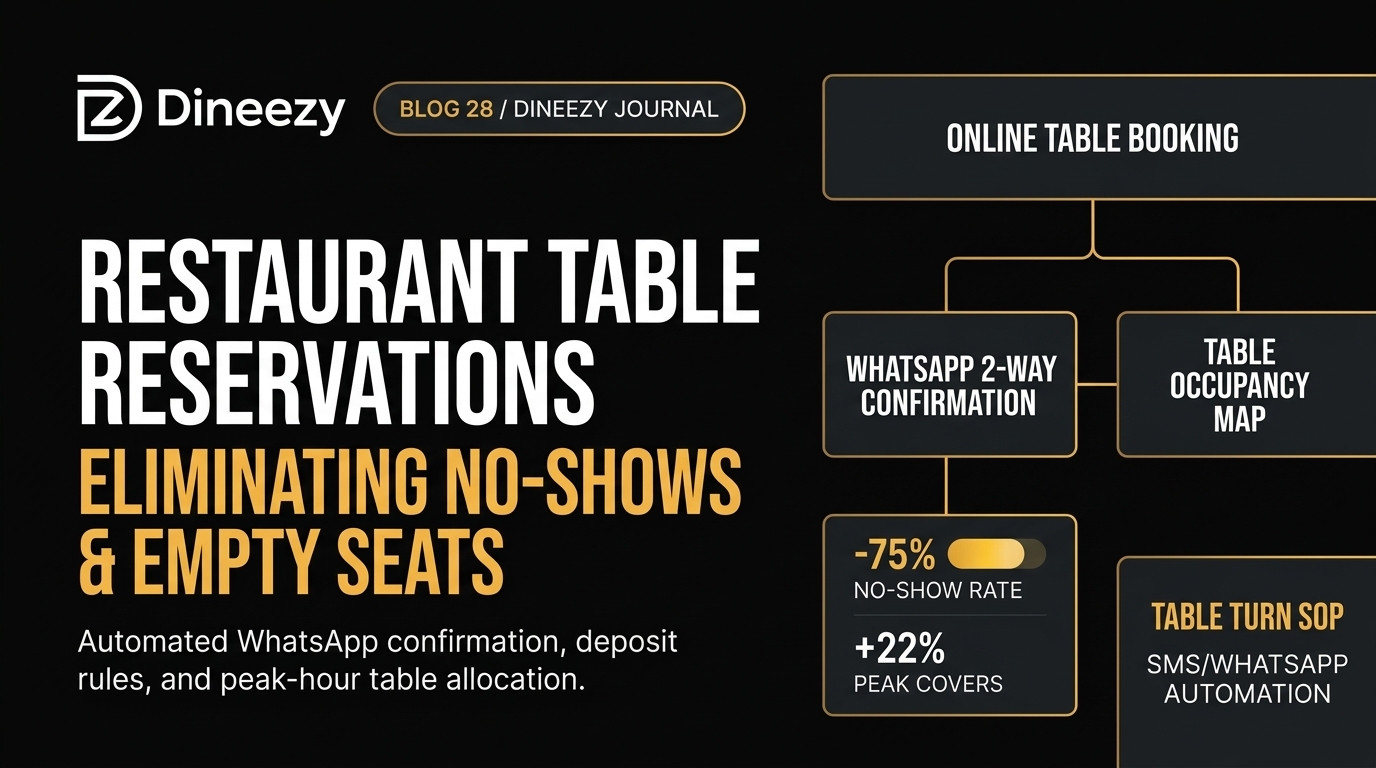
- Automated 2-Way WhatsApp Confirmations: The system automatically messages guests on WhatsApp 2 hours prior to arrival, allowing them to confirm or release their table with a single tap.
- Visual Table & Seating Map: Floor managers see an interactive floor plan displaying which tables are reserved, occupied, or approaching their turn time limit.
- Guest Preference History: Staff can see if a returning guest prefers a quiet corner booth, has peanut allergies, or is celebrating an anniversary.
5 Practical Strategies to Eliminate Restaurant No-Shows
Restaurateurs who treat table bookings as a structured operational workflow achieve dramatically lower no-show rates without alienating guests:
1. Implement Automated WhatsApp Confirmations
In India, text SMS messages are often buried in spam folders, but WhatsApp open rates exceed 90%. Sending an automated WhatsApp notification 3 hours before reservation time requesting a 1-tap confirmation ('Confirm Table' or 'Cancel Booking') gives you ample time to reallocate released tables to walk-in waitlists.
2. Enforce a Strict 15-Minute Holding Policy
Establish a clear, transparent holding rule communicated on booking receipts:
"Tables are held for 15 minutes past reservation time. After 15 minutes, the reservation is automatically released to our waiting list."
Enforcing this policy consistently prevents tables from sitting idle during peak dining hours.
3. Require Nominal Token Deposits for Large Parties (6+ Guests)
Small parties rarely warrant advance deposits, but large group bookings (birthday parties, corporate dinners of 8 to 20 seats) carry massive opportunity costs if they fail to show up. Requesting a nominal advance deposit (e.g., ₹500 to ₹1,000 per person) through a secure UPI payment link filters out uncommitted bookings and locks in table commitment.
4. Maintain a Managed Digital Waitlist for Walk-Ins
When a party cancels or fails to arrive, your floor host should be able to text the next walk-in guest waiting nearby immediately via automated WhatsApp notification, filling the empty table within two minutes.
5. Track Guest Reliability Scoring
Modern booking systems flag repeat no-show phone numbers. If a guest has booked and skipped reservations multiple times without notifying the restaurant, the system can politely prompt them to dine as a walk-in rather than blocking weekend tables in advance.
Comparing Booking Approaches
| Reservation Metric | Paper Diary / Phone Notes | Third-Party Discovery Portals | In-House Digital Reservation System |
|---|---|---|---|
| Booking Fees | None | High per-cover fees charged to restaurant | Flat software hosting; zero per-cover fees |
| Guest Data Ownership | Fragmented and unsearchable | Retained by the aggregator portal | 100% owned by your restaurant |
| WhatsApp Automation | Manual typing by busy floor staff | Standardized platform notifications | Direct customized brand messaging |
| Table Turn Coordination | Pure guesswork by floor staff | Limited floor view | Full integration with live table status |
Important Guest-Experience and Customer-Data Considerations
Managing reservations effectively is not just about avoiding empty chairs; it is about elevating guest hospitality:
- Personalized Welcomes: When a host can greet a returning regular by name and assign their preferred seating area, guest loyalty increases significantly.
- Dietary & Special Occasion Notes: Recording dietary restrictions (e.g., vegan, gluten-sensitive, Jain) during booking ensures the kitchen prepares appropriate options before the party arrives.
- Building a First-Party Customer Database: Every reservation booked directly through your website captures verified phone numbers and names, creating a valuable customer CRM for seasonal menu launches and festival promotions.
Frequently Asked Questions
Should a small cafe or casual restaurant accept reservations?
Fast-casual concepts and high-turn cafes generally benefit more from walk-in guest flow. Reservations are most valuable for destination dining, fine dining, rooftop venues, and restaurants with strong weekend family or group dining demand.
How do token deposits affect guest booking conversion?
For parties of 1 to 4 diners, advance deposits can introduce unnecessary booking friction. For large groups of 6 or more, transparent deposits are widely accepted by consumers and dramatically reduce no-show rates from 20% down to near zero.
How does Dineezy help restaurants manage floor operations?
Dineezy provides an integrated cloud platform combining high-speed POS billing, QR table ordering, kitchen display coordination, and paperless digital receipts to help restaurants accelerate table turn times and deliver smooth guest experiences.
Maximize Every Peak Dining Hour
Every table in your dining room represents valuable hospitality real estate. Replacing unorganized paper diaries with automated digital confirmations ensures your seats stay full, your waitstaff stay organized, and your peak weekend revenue reaches its full potential.
Explore Dineezy's Modern Restaurant Tech at dineezy.in/business to streamline table turnover, billing, and floor management.
Dineezy Team
Author at Dineezy