Cutting the 30% Delivery Tax: How Indian Restaurants Build a Direct Zero-Commission Ordering Channel
Introduction: The Food Delivery Math That Is Breaking Restaurant Margins Open the monthly revenue report of almost any standalone restaurant, cloud kitchen, or…
Dineezy Team
22 Sept 2026 · 7 min read
On this page14 sections
- Introduction: The Food Delivery Math That Is Breaking Restaurant Margins
- The Real Cost of Aggregator Dependency
- Comparison: Aggregator Delivery vs. Dineezy Direct Ordering
- The Direct Channel Math: Converting Just 20 Orders per Day
- How to Build Your Direct Ordering Engine with Dineezy
- 1. Launch a Branded, Zero-Commission Online Storefront
- 2. Deploy Smart Hybrid Rider Dispatch
- 3. The Packaging Flywheel: Converting Aggregator Customers into Direct Buyers
- 5-Step Implementation Checklist for Restaurant Operators
- Frequently Asked Questions
- Do customers need to download a separate mobile app to order from our website?
- How do we handle delivery customer complaints or refunds on direct orders?
- Can we offer customer loyalty rewards through direct ordering?
- The Operational Takeaway
Introduction: The Food Delivery Math That Is Breaking Restaurant Margins
Open the monthly revenue report of almost any standalone restaurant, cloud kitchen, or bakery in an Indian metro today.
On paper, gross sales look impressive. A cloud kitchen in Noida or an Asian cafe in Bengaluru might generate ₹8,00,000 in monthly online food deliveries across Swiggy and Zomato.
Then the net payout lands in the restaurant's current bank account. After deducting platform commissions, payment gateway surcharges, delivery subsidies, and mandatory discount promotions, the restaurant receives less than ₹5,40,000.
Out of that remaining sum, the operator must pay food ingredients (30% to 35%), kitchen rent, staff salaries, electricity, and custom food packaging. At the end of the month, the owner worked eighty-hour weeks to earn a net operating profit of under 4%.
In 2026, delivery aggregators remain useful for discovery, but relying on them as your exclusive delivery channel is an unsustainable financial trap. Progressive restaurants and cloud kitchens are fighting back by building their own direct, zero-commission ordering channel.
---The Real Cost of Aggregator Dependency
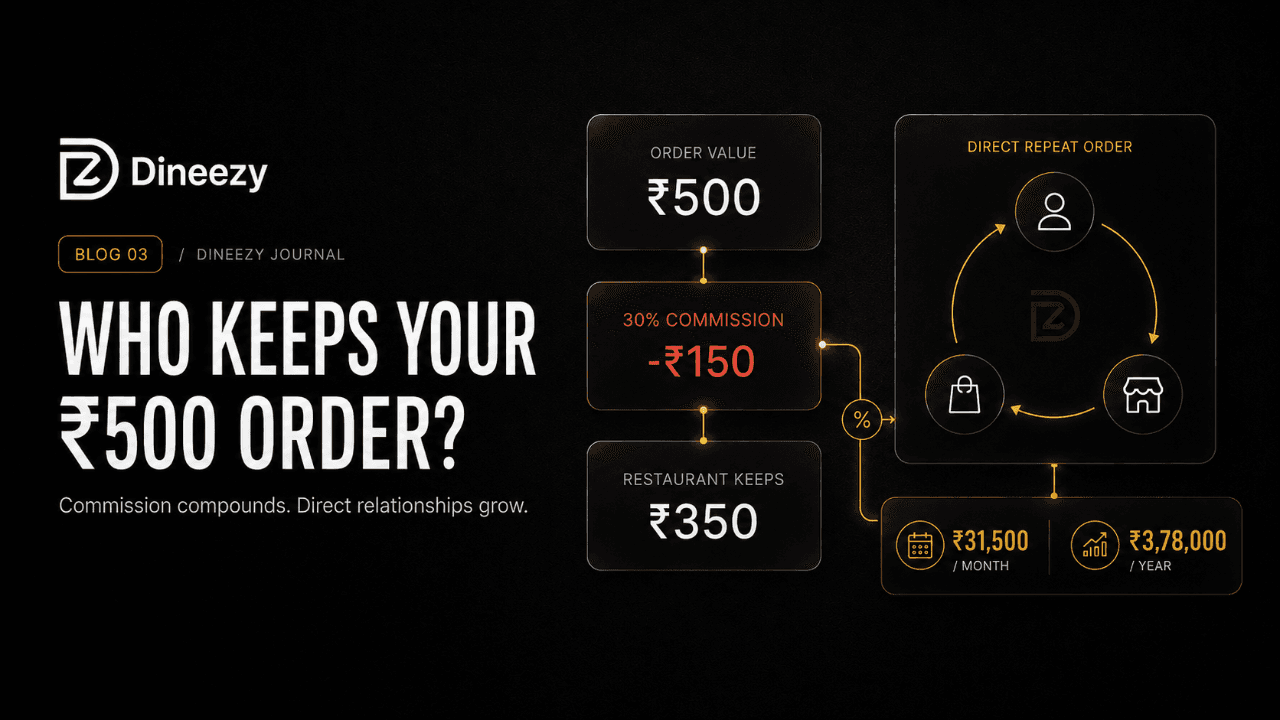
When food delivery aggregators launched in India, they charged 10% to 15% commissions as an introductory marketing service. In 2026, the aggregate operational deductions routinely exceed 30% per order:
- Base Commission: 22% to 28% plus 18% GST on the commission amount.
- Payment Gateway Fee: 1.5% to 2% on every online transaction.
- Forced Co-funded Discounts: Algorithms penalize search ranking unless restaurants fund ₹50 to ₹100 flat discounts on minimum order sizes.
- Platform Sponsored Ads: To stay visible on the first two scroll screens of category listings, brands must spend another 6% to 10% of gross revenue on in-app keyword bidding.
- Delayed Settlement Cycles: Aggregators hold restaurant payouts for 7 to 14 days, straining daily kitchen cash flow for purchasing fresh raw ingredients.
The financial loss is painful, but the strategic loss is worse: you do not own your customer data.
Aggregators mask customer phone numbers, hide order histories, and use your customers' ordering habits to recommend competing cloud kitchens and private-label brands directly below your menu.
---Comparison: Aggregator Delivery vs. Dineezy Direct Ordering
| Commercial Factor | Third-Party Aggregators (Swiggy / Zomato) | Dineezy Direct Ordering Channel |
|---|---|---|
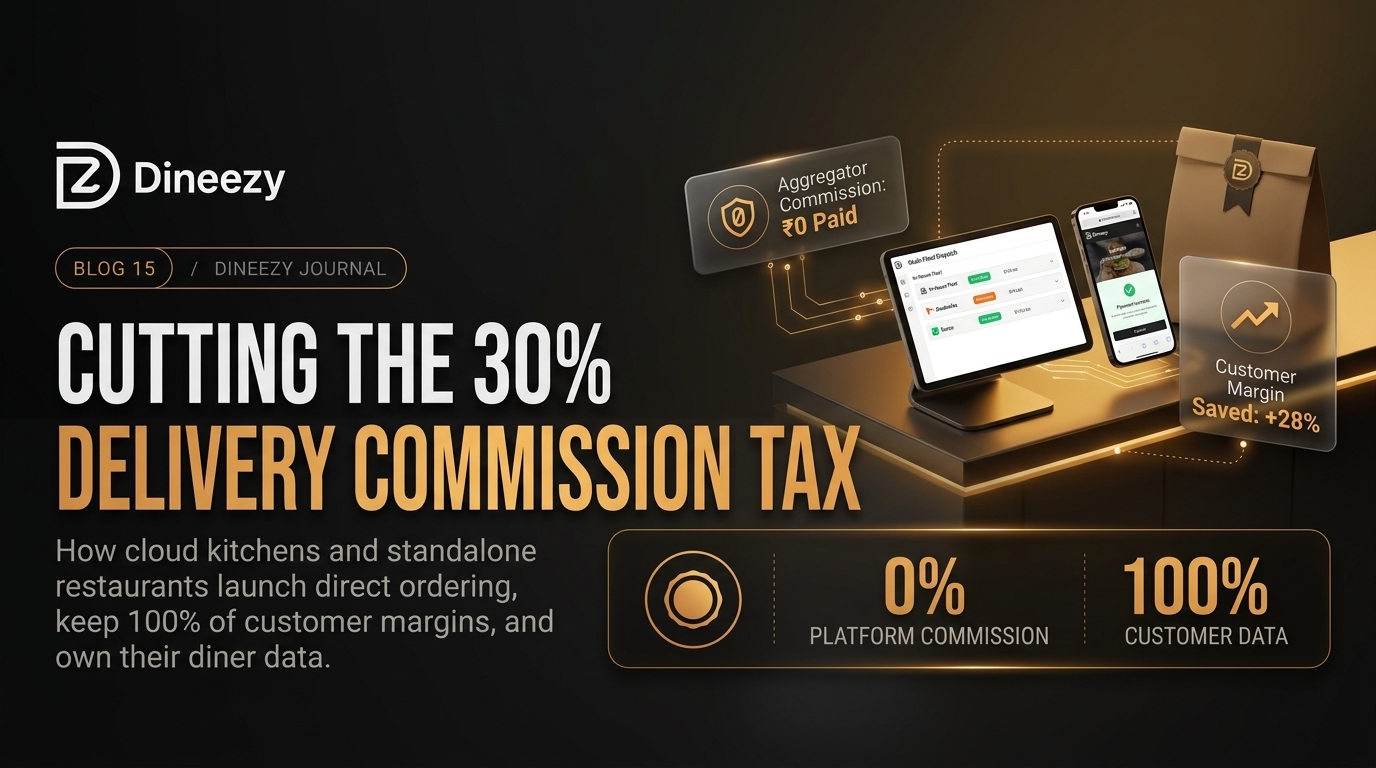
| Platform Commission | 24% to 30% per order + 18% GST on fees | 0% commission. You keep 100% of your food price |
| Customer Ownership | Masked phone numbers; aggregator owns relationship | 100% verified customer data (name, phone, order history) |
| Payment Settlement | Weekly or fortnightly payout schedule | Instant UPI settlement directly into your bank account |
| Menu & Pricing Control | Strict formatting rules; commission forces inflated prices | Complete control over pricing, combos, and custom branding |
| Rider Dispatch | Aggregator assigned rider | Hybrid flexibility: in-house staff or on-demand delivery fleets (Shadowfax, Dunzo, Porter) |
| Repeat Marketing | You pay aggregator ad fees to reach previous customers | Free automated WhatsApp marketing directly to past diners |
The Direct Channel Math: Converting Just 20 Orders per Day
You do not need to delete your restaurant profile from Swiggy or Zomato to transform your business economics. The most profitable strategy is a hybrid delivery model: use aggregators for first-time customer acquisition, but convert repeat orders to your own direct channel.
Let us calculate the financial impact of shifting just 20 repeat delivery orders per day from an aggregator to a direct Dineezy storefront:
- Daily Converted Orders: 20 orders per day
- Average Order Value (AOV): ₹600
- Daily Direct Order Volume: 20 × ₹600 = ₹12,000
- Aggregator Commission Saved (at 26% average): ₹3,120 per day
- Delivery Rider Cost via Third-Party Fleet: ₹50 flat per delivery (often covered partially by customer delivery fee or absorbed)
- Net Profit Increase per Day: Roughly ₹2,600
- Net Monthly Profit Added: ₹78,000 per month (over ₹9,36,000 annually)
That ₹78,000 in saved commissions is pure operating profit. It pays the salary of two full-time kitchen cooks or covers half your monthly restaurant rent, generated from customers who already love your food.
---How to Build Your Direct Ordering Engine with Dineezy
1. Launch a Branded, Zero-Commission Online Storefront
With Dineezy, your restaurant receives a dedicated, mobile-optimized online ordering web app under your own brand name (e.g., order.yourrestaurant.in). There is zero app download required for the customer.
Diners browse your full menu with vibrant dish photography, select portion sizes and add-ons (extra cheese, spice levels, beverage pairings), and checkout in three taps using instant UPI (PhonePe, Google Pay, Paytm, BHIM) or credit/debit cards. The payment lands directly in your merchant bank account without intermediate withholding.
2. Deploy Smart Hybrid Rider Dispatch
The most common objection restaurant owners raise against direct ordering is: "Who will deliver the food?"
Dineezy solves this through a flexible, multi-fleet dispatch system:
- In-House Delivery Staff: For orders within a 2-kilometer radius during peak hours, your own staff handle deliveries quickly and at minimal variable cost.
- On-Demand Logistics Integration: For deliveries across greater distances or during unexpected order surges, Dineezy connects to leading on-demand delivery fleets (such as Shadowfax, Dunzo, and Porter). With one click on your POS screen, the nearest rider is dispatched to your kitchen to pick up the package.
The customer receives an automated WhatsApp message with a live order status link to track the rider in real time, matching the delivery convenience of commercial aggregator apps.
3. The Packaging Flywheel: Converting Aggregator Customers into Direct Buyers
Every delivery bag that leaves your kitchen via an aggregator represents an opportunity to acquire a permanent direct customer.
Implement the Packaging Incentive Flywheel:
"Place a high-finish sticker or printed card on every Swiggy/Zomato order: 'Love our food? Support our kitchen directly! Scan this QR code or visit our site to get ₹100 off your next order plus complimentary dessert, with zero platform markups.'"
A customer who orders from your kitchen once every two weeks will gladly switch to your direct ordering link when they realize the food arrives fresher, costs less, and comes with exclusive perks. Within ninety days, 20% to 30% of your regular delivery volume moves off third-party platforms onto your high-margin direct channel.
---5-Step Implementation Checklist for Restaurant Operators
- [ ] Set Up Your Dineezy Direct Storefront: Configure your digital menu, category sections, appetizing food photos, and store operating hours.
- [ ] Connect Direct UPI Settlement: Link your restaurant current account so customer payments settle immediately without weekly delays.
- [ ] Configure Delivery Zones and Minimum Orders: Set delivery radius bands (e.g., free delivery above ₹499 within 4 km, standard fee for farther distances).
- [ ] Print Packaging Conversion Inserts: Design 3-inch branded flyers offering exclusive direct-order discounts on all delivery boxes.
- [ ] Add Order Links to Social Media: Place your direct Dineezy ordering link in your Instagram bio, Google Business listing website button, and WhatsApp catalog.
Frequently Asked Questions
Do customers need to download a separate mobile app to order from our website?
No. Dineezy operates as a lightning-fast Progressive Web App (PWA). Customers simply tap your link on WhatsApp, Instagram, or Google, view your menu, and place their order in any mobile web browser within thirty seconds.
How do we handle delivery customer complaints or refunds on direct orders?
Because you hold direct communication with the customer via WhatsApp and phone, resolving issues is fast and personal. If a packaging spill occurs, your manager can instantly issue a replacement dish, credit their account, or refund the amount via UPI, building genuine customer goodwill instead of impersonal automated platform dispute tickets.
Can we offer customer loyalty rewards through direct ordering?
Yes. Dineezy includes built-in customer loyalty tracking. You can automatically grant reward points, birthday discounts, or cashbacks that customers can redeem on their next direct order, giving them a strong financial reason to remain loyal to your direct storefront.
---The Operational Takeaway
Paying a 30% commission to acquire a brand-new customer makes business sense. Paying that same 30% commission on the tenth order placed by a regular customer who lives 800 meters from your kitchen destroys your operating margin.
Take control of your customer relationships, eliminate commission leakage, and build a profitable delivery business where you own your revenue, your customer data, and your brand reputation.
---Ready to cut delivery commissions and launch your direct ordering channel?
Launch Your Zero-Commission Direct Ordering & Delivery System with Dineezy
Published by Atharv K. | F&B Systems Explorer | Dineezy F&B Intelligence
Dineezy Team
Author at Dineezy